
Repair
Hop-Up Leaking or Losing Its Setting: The Repair
August 23, 20266 min read
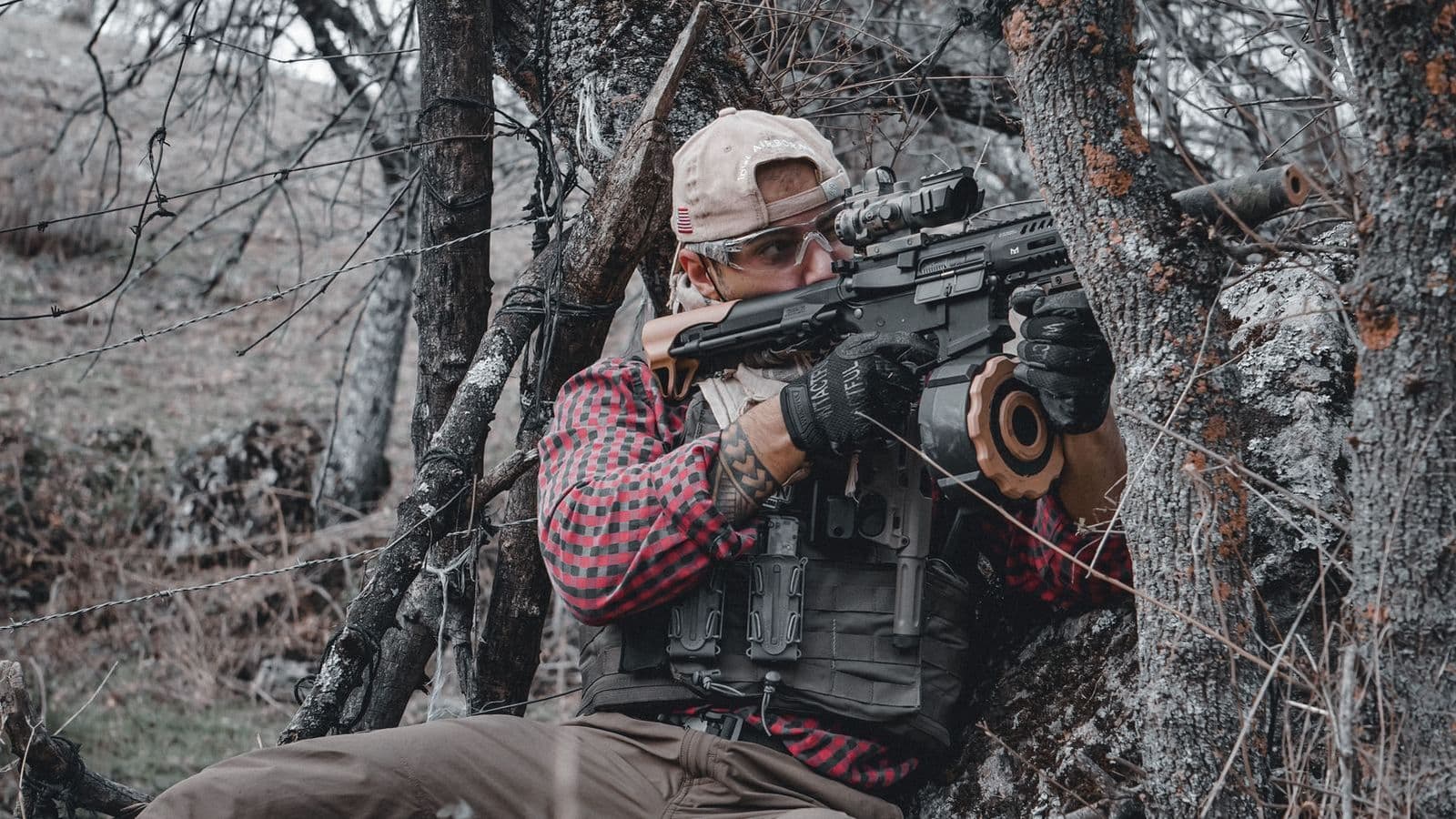
A hop-up that won't hold its setting from one game to the next, or that drifts as magazines go by, is one of the most common complaints among regular players. The instinct is usually to keep touching the dial, when the problem is rarely the setting itself but an internal part that needs checking or replacing.
A worn or deformed bucking
The rubber bucking inside the hop-up loses its flexibility over time and with heat exposure. A hardened or slightly deformed bucking no longer compresses the BB consistently on every shot, which produces accuracy that varies from one shot to the next even at an identical setting. It's the most frequent cause of a hop-up that never seems to stabilize, whatever setting is tried.
The nub or patch that has shifted
The small piece that presses on the bucking (nub or patch depending on the system) can shift slightly with the repeated vibration of firing, changing the exact contact point without it being visible from outside. Even a minor shift is enough to make the setting drift between two games, giving the impression the hop-up never holds the chosen position.
The adjustment dial itself
- A worn dial or a tired ratchet can move on its own under firing vibration, without the player touching it
- A locking mechanism (ratchet or screw systems on some models) that's poorly maintained loses its ability to hold a stable position
- Replacing the dial alone, without touching the rest of the hop-up, is enough in this specific case
An air leak at the nozzle seal
A worn nozzle seal lets compressed air escape before it fully reaches the BB, which can look like a hop-up problem when the real cause is a loss of seal further upstream. This type of leak often shows up as a combined loss of accuracy and FPS, a signal that points the diagnosis toward the seal rather than the hop-up alone.
The diagnosis that isolates the real cause
An accuracy test at a fixed setting across several successive magazines reveals whether the drift is gradual (bucking heating up and deforming slightly during use) or random (nub shifting, dial slipping). This distinction directly guides the repair: bucking replacement in the first case, checking the holding mechanism in the second.
What this type of repair costs
Replacing a bucking or a hop-up dial remains a quick, inexpensive job, comparable to a standard adjustment, provided the diagnosis identifies the right part to change from the start rather than replacing the whole hop-up as a precaution.
What to remember
- A worn or hardened bucking is the most common cause of a hop-up that never stabilizes
- A shifted nub or patch drifts the setting between games with no visible damage
- A worn dial or tired ratchet can move on its own under firing vibration
- A leaking nozzle seal gives a combined loss of accuracy AND FPS
- A fixed-setting test across several magazines shows whether the drift is gradual or random
A hop-up that never holds its setting can be diagnosed in a few minutes on the bench. Get a free diagnostic
How we do it on the bench
- Adjusting an AEG hop-up, step by step
- Aligning a hop-up rubber (bucking) with the barrel
- Replacing the hop-up rubber (bucking) on an AEG
- Which hop-up rubber to pick by hardness (50, 60, 70)
- Installing a flat hop-up chamber
- Hop-up nub: when and how to replace it
- Hop-up sending BBs to the left or right
- Trimming or cutting a rubber for long-range shooting
- Lubricating the hop-up: silicone or nothing
- Choosing the right nozzle length
- Replacing an AEG inner barrel, step by step
- Cleaning an inner barrel without damaging it
- BB stuck in the barrel: what to do
- Aligning the barrel and hop-up on an AEG
- Leaking seal between barrel and chamber: how to diagnose it
- Does a more precise barrel really change range?
- Nozzle and hop-up on a GBB
- Upgrade a VSR-10 sniper
Not sure what's wrong with your replica?
Our diagnostic is free: we open it up, identify the fault, and tell you exactly what your replica needs before touching anything.